

 Achy Muscles
 Arthritis, Bursitis & Tendonitis
 Back Pain
 Fibromyalgia
 Foot & Lower Leg Pain
 Joint Pain
 Knee Pain
 Neck Pain

If you're dealing with persistent pain, you've probably encountered both TENS machines and massage guns as potential solutions. Between social media ads, athlete endorsements, and recommendations from friends, it's easy to feel overwhelmed by the options. You might even wonder if these devices do the same thing, or which one you should choose.
Here's the truth: Comparing TENS devices to massage guns is a bit like comparing apples to oranges.
While both are marketed for pain and discomfort, they work through completely different mechanisms and address different aspects of the pain experience. A massage gun uses mechanical percussion to manipulate muscle tissue, essentially replicating (and intensifying) what a massage therapist's hands would do. A TENS machine, on the other hand, uses electrical stimulation to interact with your nervous system in ways that physical manipulation cannot achieve.
Understanding what each device actually does—and more importantly, what each can't do—will help you make an informed decision about managing your discomfort. By the end of this article, you'll understand when each approach makes sense, and why many people dealing with chronic pain find that neither single-function device fully addresses their needs.
What is a TENS machine?
TENS stands for Transcutaneous Electrical Nerve Stimulation. A TENS machine is a pain relief device that delivers low-voltage electrical impulses through electrode pads placed on your skin. These gentle electrical signals work by stimulating sensory nerve endings, which helps disrupt pain signals traveling to your brain.

The science behind TENS therapy involves what's known as the gate control theory of pain. Picture a gate in your spinal cord that controls which signals reach your brain. When the electrical stimulation from a TENS machine activates certain nerve fibers, it essentially "closes the gate" on pain transmission, preventing discomfort signals from getting through. TENS therapy may also encourage your body's natural production of endorphins—your body's own pain-relieving compounds.
TENS machines are widely used for a variety of pain conditions, including:
- Chronic back and neck pain
- Arthritis discomfort
- Nerve-related pain
- Menstrual cramps
- Post-surgical pain
- Sciatica
Key benefits: TENS therapy provides temporary, drug-free pain relief that addresses pain at its source—the nerve level. Because TENS works through electrical stimulation rather than mechanical force, it produces a gentle tingling sensation without requiring physical pressure on sensitive or inflamed areas.
DR-HO’S TENS machines are regulated medical devices (Health Canada-Authorized and FDA-cleared), which means they've undergone rigorous testing for safety and effectiveness. They can be used for extended periods safely, making them suitable for managing chronic pain conditions.
Important limitations: Unlike DR-HO’S devices, many traditional TENS units focus exclusively on pain signal transmission. While this provides valuable relief, standard TENS devices don't directly address muscle tension that often accompanies and perpetuates pain. Additionally, because conventional TENS machines use repetitive stimulation patterns, your nervous system can adapt over time (a phenomenon called accommodation) which may reduce effectiveness with continued use.
What is a massage gun?
Massage guns, also called percussive therapy devices or percussion massagers, deliver rapid, repetitive mechanical pressure directly to muscle tissue. If you've seen the ads showing athletes using what looks like a power drill on their legs after a workout, that's a massage gun in action.
These devices work through physical manipulation. The rapid strikes increase blood flow to the targeted area, which can help flush out metabolites like lactic acid and calcium that accumulate during exercise and contribute to muscle soreness. The mechanical action may also help release muscle knots and adhesions in the fascia (the connective tissue surrounding muscles).

Think of it as a high-intensity, hands-free version of massage therapy—you get similar benefits to what a massage therapist's hands provide, just delivered more rapidly and with less effort on your part.
Massage guns are commonly used for:
- Post-workout muscle soreness
- Athletic recovery and performance
- Tight, tense muscles from stress or prolonged sitting
- Warming up before exercise
- Improving flexibility and range of motion
Key benefits: Massage guns excel at addressing mechanical muscle tension. They provide immediate tactile feedback, allowing you to feel the device working on your muscles in real-time. They can reach areas that would be difficult to massage effectively with your own hands, and they're portable enough to use at home, at the gym, or while traveling. For athletes and active individuals focused on recovery and performance optimization, massage guns can be a valuable addition to their routine.
Important limitations: Here's what massage guns don't do:
-
They don't address pain signals at the nerve level. The mechanical percussion works on muscle tissue, but it can't interact with your pain transmission pathways the way electrical stimulation can.
-
More importantly, the intense mechanical action that makes massage guns effective for muscle work can actually be problematic when you're dealing with pain or injury. Physical therapists and medical professionals generally advise against using massage guns directly on areas of active pain, inflammation, or injury. The vigorous percussion can overstimulate already sensitized tissues, potentially causing bruising, increased inflammation, or even muscle damage if used too aggressively or for too long.
-
Massage guns also come with a longer list of contraindications than TENS machines. They should be avoided near joints and bones, over the spine, and in people with conditions like low bone density, deep vein thrombosis, acute inflammation, or fibromyalgia. Pregnant individuals should avoid them as well. The typical recommendation is to limit use to just 1-2 minutes per muscle group to prevent tissue overstimulation.
In short, massage guns are excellent tools for muscle maintenance and athletic recovery, but they're not designed as pain management devices. They work best when you're dealing with general muscle tightness or post-exercise soreness—not when you're experiencing active pain.
TENS machine vs massage gun: Key differences
To help you see how these devices differ, here's a side-by-side comparison:
|
Feature |
TENS machine |
Massage gun |
|
Primary Purpose |
Disrupting pain signals at nerve level |
Mechanical muscle manipulation and recovery |
|
Mechanism |
Electrical stimulation of sensory nerves |
Percussive/vibration pressure on muscle tissue |
|
Target |
Nerve endings and pain pathways |
Muscle tissue and fascia |
|
Sensation |
Gentle tingling without muscle movement |
Mechanical pressure with vibration |
|
Common applications |
Chronic pain, nerve pain, arthritis, period pain |
Post-workout soreness, muscle tightness, athletic recovery |
|
Use during pain |
Designed specifically for pain relief |
Generally not recommended on painful areas |
|
Safety profile |
Medical device with established guidelines |
Requires careful technique to avoid injury |
|
Duration of use |
Can be used for extended sessions |
Limited to 1-2 minutes per muscle group |
The key takeaway here is that these aren't competing devices; they're addressing fundamentally different aspects of discomfort through entirely different mechanisms. Massage guns excel at mechanical muscle work, functioning as a replacement or supplement for hands-on therapy. They're particularly valuable for athletes and active individuals focused on recovery and performance.
TENS machines, on the other hand, target the pain signaling system itself, working at the nerve level to provide relief that no amount of physical manipulation can achieve. They're medical devices designed specifically for pain management rather than muscle maintenance.
The choice between them often comes down to a simple question: Are you dealing with pain, or are you dealing with muscle soreness and tightness? If you're experiencing chronic pain conditions, nerve-related discomfort, or inflammation, you need a device that addresses pain signals. If you're managing post-workout soreness or general muscle tension without significant pain, mechanical percussion might serve you well.
When each device makes sense
Consider a massage gun if:
- You're an athlete or active individual focused on performance and recovery
- You experience muscle tightness from stress, poor posture, or prolonged sitting
- You want to supplement or reduce the frequency of professional massage therapy
- You need warm-up preparation or cool-down support for exercise
- You're dealing with general muscle tension without significant pain or inflammation
Consider a TENS machine if:
- You're managing chronic pain conditions like arthritis, sciatica, or fibromyalgia
- You experience nerve-related discomfort or radiating pain
- You need ongoing pain relief that doesn't involve medication
- You have sensitive or inflamed areas that can't tolerate mechanical pressure
- You want a medical device approach to pain management with established safety guidelines
- You need something gentle enough for daily, extended use
The reality for many people dealing with pain
When you're shopping for pain relief, it's natural to look at individual devices and try to pick the "best" one. But here's what most comparisons miss: The question isn't really "Which device is better?" The more important question is "Which approach actually addresses how pain works in my body?"
Traditional single-function devices (whether a standard TENS unit or a massage gun) ask you to address only one piece of a complex puzzle. You can temporarily block pain signals or mechanically manipulate tight muscles, but you're still leaving significant aspects of your discomfort unaddressed.
There's another limitation worth understanding: Accommodation. Whether it's the repetitive mechanical pattern of a massage gun or the fixed electrical patterns of a standard TENS unit, your body is remarkably good at adapting to predictable stimulation.
Over time, the therapy that worked well initially may gradually become less effective, not because your condition has changed, but because your nervous system has learned to tune out the unchanging stimulus.
This is why an integrated approach that works with multiple aspects of your body's pain and recovery systems makes more sense than choosing between limited single-function options.
DR-HO'S 4-in-1 AMP technology: Beyond the either/or decision
Rather than forcing you to choose between nerve stimulation or muscle manipulation, DR-HO'S proprietary 4-in-1 AMP Technology provides a comprehensive approach that addresses multiple aspects of pain simultaneously. This isn't simply about combining existing technologies—it's about creating synergistic interaction between four complementary therapies that work together with your body's natural processes.
The four components of our AMP Technology are:
-
TENS (Transcutaneous Electrical Nerve Stimulation) sends low-voltage electrical impulses through your skin to stimulate sensory nerve endings and disrupt pain signals before they reach your brain, providing immediate relief. This foundational pain relief mechanism engages the gate control theory, helping block pain transmission while triggering your body's natural endorphin release.
-
EMS (Electrical Muscle Stimulation) causes muscles to contract and relax rhythmically, which can help release tight knots and improve local circulation. Where chronic pain often leads to muscle tension and protective guarding, this gentle rhythmic action helps ease the tightness that compounds discomfort. Unlike the mechanical percussion of a massage gun, EMS works through electrical stimulation, providing muscle work without the intense physical pressure that can be uncomfortable on sensitive or inflamed areas.
-
NMES (Neuromuscular Electrical Stimulation) targets specific nerve pathways for deeper muscle contractions, helping to re-educate muscles, increase local circulation, and improve range of motion. This is particularly valuable when pain has led to weakened muscles or altered movement patterns. By promoting healthy nerve-muscle interaction, NMES supports the functional strength and coordination needed for daily activities.
-
Auto-Modulating Pulses continuously vary the electrical impulses across over 300 stimulation patterns to maintain the effectiveness of the therapy. Your body doesn't have the opportunity to adapt to predictable stimulation because the patterns are constantly evolving in subtle, intelligent ways.
How DR-HO’S 4-in-1 technologies work together
These four components don't just coexist—they create a synergistic effect that addresses pain more comprehensively than any single approach. While TENS provides immediate pain relief at the nerve level, EMS works on the muscle tension that often accompanies and perpetuates that pain. NMES provides deeper therapeutic benefit, supporting functional improvement and healthy circulation. Meanwhile, the Auto-Modulating Pulses ensure that all three therapies remain effective over time, session after session.
This integrated approach addresses both the immediate experience of pain and the underlying factors that perpetuate it. And because it works through gentle electrical stimulation rather than mechanical force, it's safe to use on areas of active pain or inflammation—places where a massage gun would be inappropriate or potentially harmful.
DR-HO'S devices are Health Canada-Authorized and FDA-cleared medical devices, meaning they've undergone rigorous testing and meet established standards for safety and effectiveness.
High-level overview of DR-HO’S devices:
|
|
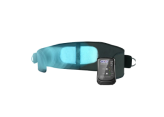
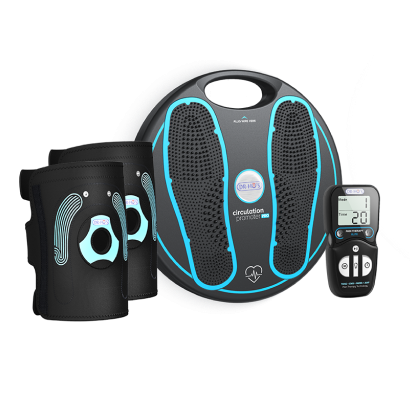
This portable and drug-free medical device seamlessly integrates TENS, EMS, and NMES technology with cutting-edge AMP Pain Relief Technology, allowing you to manage your pain effortlessly wherever you are. |
|
|
|
|
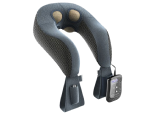
DR-HO'S Neck Pain Pro is the only neck support cushion with built-in muscle and nerve stimulation. Equipped with DR-HO’S AMP Pain Relief Technology, it can relieve and relax your neck and shoulder pain. |
|
|
DR-HO’S Triple Action Back Belt is a wearable back support with a built-in nerve and muscle stimulator that not only supports your back, but also helps to relieve your back pain and sciatica pain using our patented AMP Pain Relief technology. |
Using DR-HO’S: Safety considerations and best practices
DR-HO'S devices are designed with your safety in mind and come with comprehensive instructions for proper use. Here are some key safety guidelines:
Preparation and use:
- Always start with clean, dry skin for proper electrode contact
- Begin with the lowest intensity setting and gradually adjust to a comfortable level
- You can use your DR-HO'S device daily as part of your wellness routine
- Start with shorter sessions of 15-20 minutes and adjust based on your needs
Areas to avoid:
- Eyes, forehead, temples and the surrounding area
- Mouth
- Front of the neck or throat
- Over the heart and chest area
- Irritated, broken skin, or wounds
- Directly over the spinal column
- Any areas with tumors
Special considerations:
- Do not use while pregnant
- If you have cardiac concerns, consult your healthcare provider before use
- Do not use with a pacemaker or similar implanted device
- Always remove jewelry or metal objects from treatment areas
When to seek medical advice:
If pain persists, worsens, or is accompanied by other concerning symptoms such as swelling, redness, fever, or numbness, consult a healthcare provider to identify and address the underlying cause.
For complete best practices and electrode maintenance guidance, refer to the instructions provided with your device or visit our support resources online.
Making your decision: Questions to ask yourself
When deciding between a massage gun and a TENS machine (or considering whether a more comprehensive approach makes sense), ask yourself these questions:
What type of discomfort are you primarily managing?
If you're dealing with active pain (whether chronic conditions like arthritis, nerve-related discomfort, or persistent pain that interferes with daily activities), you need a device designed specifically for pain management. If you're mainly addressing muscle soreness after workouts or general tightness without significant pain, your needs are different.
How frequently will you need relief?
Daily chronic pain management requires different tools than occasional athletic recovery. Devices designed for extended, frequent use with established safety profiles become more important when you're relying on them regularly for quality of life.
What are your safety considerations?
If you're dealing with injury, inflammation, sensitive areas, or conditions like fibromyalgia where intense stimulation can trigger flares, the vigorous mechanical action of a massage gun may not be appropriate. Medical device technology with established safety guidelines becomes more important in these situations.
What's your pain management budget over time?
Consider the cost of the device against your current spending on massage therapy, pain medications, or other treatments. A quality pain management device is an investment, but when you calculate the ongoing costs of alternatives, the value proposition often becomes clear. Also consider versatility—a device that multiple family members can use for different pain conditions provides more value than a single-purpose tool.
Are you looking for a medical approach or an athletic recovery tool?
TENS machines are regulated medical devices designed specifically for pain management. Massage guns are consumer wellness products designed for muscle maintenance and athletic recovery. Understanding this distinction can help clarify which category of device aligns with your primary needs.
Conclusion: Fundamentally different approaches to pain management
TENS machines and massage guns represent fundamentally different approaches to managing discomfort. Massage guns excel at mechanical muscle work and athletic recovery, using percussive force to increase circulation and release tension in muscle tissue. TENS machines address pain at a different level entirely, using electrical stimulation to interact with your nervous system and disrupt pain signals before they reach your brain.
For someone dealing with post-workout soreness or general muscle tightness without significant pain, a massage gun can be a valuable tool. For someone managing chronic pain conditions, nerve-related discomfort, or inflammation, a TENS machine provides relief that mechanical percussion simply cannot achieve.
But here's what this comparison reveals: Most people dealing with chronic pain aren't experiencing just nerve signals or just muscle tension. They're experiencing a complex interplay of both, working together in ways that perpetuate discomfort. Neither single-function device—whether a standard TENS unit or a massage gun—can fully address this reality.
DR-HO'S 4-in-1 AMP Technology offers a comprehensive solution that works with multiple aspects of your body's natural pain and recovery systems simultaneously. By integrating TENS, EMS, and NMES with Auto-Modulating Pulses that prevent nervous system accommodation, these devices provide more complete relief than choosing between limited single-purpose alternatives.
Rather than forcing yourself to pick between competing approaches—or purchasing multiple devices to cover different needs—consider technology specifically designed to address pain comprehensively. DR-HO'S devices work with your body's natural processes to provide temporary relief while supporting your long-term comfort and function.
Explore DR-HO'S innovative devices and discover how our proprietary 4-in-1 AMP Technology can make a meaningful difference in how you manage pain and maintain your quality of life.
Disclaimer: DR-HO'S content is intended for informational purposes only and should not be taken as medical advice. Please consult a certified medical professional for diagnosis and treatment recommendations.
FAQs
Is a muscle stimulator the same as a TENS unit?
No, muscle stimulators (EMS devices) and TENS units work differently. TENS targets sensory nerves to disrupt pain signals, while EMS targets motor nerves to cause muscle contractions. However, DR-HO'S devices integrate both technologies—along with NMES and Auto-Modulating Pulses—for comprehensive pain relief that addresses both nerve-based pain and muscle tension. For a detailed comparison, see our complete guide on muscle stimulator vs TENS unit.
Can I use a TENS unit while pregnant?
No, you should not use DR-HO’S TENS devices during pregnancy. While TENS therapy is generally safe for many conditions, pregnancy is a contraindication for electrical stimulation devices. If you're pregnant and experiencing pain, consult your healthcare provider for pregnancy-safe pain management options.
How to use a TENS machine for period pain?
TENS can be highly effective for menstrual cramps and provides a drug-free alternative to pain medication. Place electrode pads on your lower abdomen and/or lower back, depending on where you experience cramping. Start with a lower intensity setting and adjust upward to a comfortable level. You can use your TENS device throughout your menstrual period as needed. Many people find that using it at the first sign of cramping helps prevent pain from intensifying.