

 Achy Muscles
 Arthritis, Bursitis & Tendonitis
 Back Pain
 Fibromyalgia
 Foot & Lower Leg Pain
 Joint Pain
 Knee Pain
 Neck Pain

Anyone who has experienced the sudden pain and discomfort of a muscle spasm can attest to how much of a toll it can take. Among many back-related issues, muscle spasms in the lower back can pose a major challenge to those who suffer from them regularly.
Let’s take a closer look at the causes of lower back spasms, their symptoms along with a few prevention tips and relief techniques that will allow you to better manage pain and get back to doing the things you love!
Those who have experienced a back spasm describe it as a sudden onset of tightness in the lower back. Spasms start either as a mild twitch or as a sudden tightening of the muscles, often without warning. These spasms are involuntary contractions of the lower back muscles. The symptoms can range from mild discomfort, such as a feeling like a fist is pressing into your back or one side of your spine, to intense, very painful sensations that can prevent you from moving normally. A lower back spasm can last for hours up to a few days and can dramatically reduce mobility due to pain and tightness.
Understanding Lower Back Muscles
The lower back muscles are essential for supporting your spine and allowing you to move comfortably throughout your day. When these muscles suddenly tighten, it can result in a muscle spasm—a common culprit behind lower back pain. Muscle spasms occur when the lower back muscles contract involuntarily, often leading to pain, stiffness, and a cramping sensation that can make even simple movements difficult.
There are several factors that can trigger muscle spasms in the lower back. Everyday activities like heavy lifting, sudden twisting, or even maintaining poor posture for long periods can put extra strain on the back muscles, increasing the risk of a muscle strain or spasm. Sometimes, spasms happen as a result of overexertion during exercise or from sitting in one position for too long, causing the muscles to tense up and become stiff.
If you find that muscle spasms are interfering with your normal activities or causing intense pain, it’s important to consult a healthcare provider. In some cases, they may prescribe muscle relaxants to help ease muscle tension and provide pain relief. However, muscle relaxants should only be used under medical supervision, as they can have side effects and may interact with other medications. Physical therapy is another effective option, as a physical therapist can guide you through specific exercises and stretching routines designed to reduce muscle tension, improve mobility, and prevent future spasms.
Prevention is key when it comes to managing lower back spasms. Maintaining good posture, especially when sitting or lifting heavy objects, can help protect your back muscles from unnecessary strain. Incorporating strengthening exercises that target your core and lower back into your regular exercise program can also make a big difference in reducing the risk of chronic low back pain and debilitating pain from muscle spasms. Simple lifestyle modifications, such as taking regular breaks to stretch, using a foam roller or tennis ball to relieve tight spots, and avoiding activities that trigger muscle spasms, can all contribute to better overall health.
It’s also important to recognize that frequent or severe muscle spasms may be a sign of underlying conditions, such as chronic low back pain or nerve problems. If you notice that spasms occur regularly or are accompanied by other symptoms like leg weakness or numbness, seeking advice from a healthcare provider is essential to rule out more serious issues.
When it comes to treatment, there are a variety of options available. Home remedies like applying a heating pad or cold packs to the affected area can help soothe sore muscles and reduce inflammation. Noninvasive treatments, such as physical therapy or chiropractic care, can also be effective in managing symptoms and improving your quality of life. In some cases, medication may be necessary, but it’s always best to work with your healthcare provider to determine the most appropriate approach for your specific needs.
By understanding how your lower back muscles function and what can trigger muscle spasms, you can take proactive steps to prevent them. Focusing on good posture, regular exercise, and healthy lifestyle habits will not only help reduce the risk of lower back spasms but also support your overall well-being.
What are the causes of lower back spasms?
Muscle spasms in the lower back often occur when you exert an excessive amount of strain or energy, such as while performing heavy lifting, working out or doing a strenuous activity. Injury is a primary trigger for lower back muscle spasms. Lower back spasms can also be traced back to injuries to the muscles, tendons, and ligaments in the back, or they can be related to more serious medical conditions.
Those who have weak abdominal muscles are also prone to muscle spasms in the lower back as they help support the back. Weak or stiff muscles in the back itself can injure more easily than muscles that are stronger and more flexible.
There are several risk factors that can increase the likelihood of developing lower back spasms, including arthritis or a ruptured disc in the spine. Arthritis in the lower back can put extra pressure on the spinal cord, which results in pain in the back and legs. A ruptured or bulging disc in the vertebrae -the small bones that form the spinal canal -may also put more strain on a nerve and cause lower back pain. These are examples of spinal conditions, and vertebra shifts, such as those seen in spondylolisthesis, can also contribute to spasms.
Fitness deficiency is also a common cause for lower back spasms:
-
Dehydration
-
Low blood mineral levels, such as potassium and calcium
-
Tightness in the tendons that run down the back of the legs (the hamstrings)
Dehydration and low mineral levels can also lead to muscle cramps, which are painful involuntary muscle contractions that may occur alongside or contribute to back spasms.
In rare circumstances, muscle spasms in the lower back can also be a symptom of more serious problems, including:
-
Ankylosing spondylitis - an inflammatory disease can cause some of your smaller bones to fuse over time, which leads to hunched-forward posture and difficulty of breathing
-
Epidural abscess (localized infection along the spinal canal)
-
Gallstones
-
Kidney stones
-
Pyelonephritis (kidney infection)
-
A tumor
While back spasms certainly are not definitive signs of any of the above ailments, those who experience them regularly should seek out professional medical advice. A thorough review of your medical history can help identify underlying causes of recurrent or severe spasms and guide appropriate treatment.
What are some other symptoms that might occur with lower back spasms?
Depending on the underlying disease or condition, lower back spasms may accompany other symptoms. Chronic spasms, which persist over time, may be associated with ongoing pain and disability and could indicate a more serious underlying issue. It is very likely that symptoms that frequently affect the back may also involve other body systems.
Musculoskeletal symptoms that may occur along with a lower back spasm
-
Hip pain
-
The curvature of the spine
-
“Foot drop” (the feeling of the foot slapping the ground; caused by leg weakness)
-
Neck pain and stiffness
-
Pain, numbness or tingling in one leg or hip
-
Shoulder or arm pain
-
Stiffness in the spine
Neurologic (Nerve-related) symptoms that may occur along with a lower back spasm
-
Headache, particularly in the back of the head
-
Nerve problems that cause pain, numbness or tingling in an arm, buttock, shoulder or leg
-
Sciatica (a shooting pain down the full extent of the back of one leg)
While prescription medications and interventional procedures are among the choices for treating and/or relieving pain, there are also steps you can take to manage muscle spasms in the lower back and the resulting pain.
Ultimately, these pain management and relief tips can be rolled into your daily routine to help you feel better!
1. Breathing Techniques for Lower Back Spasms
The muscles you use to help you breathe are connected to your lumbar vertebrae, which may help you ease tension in these muscles and also correct your spinal alignment. Try the following breathing exercises to find relief when a lower back spasm strikes.
Back-opening breathing technique
Step 1: Find a comfortable position. Sitting upright (without overextending your posture) is often an easy place to start.
Step 2: Breathe in and send the air towards your tailbone.
Step 3: Continue to breathe and feel the air travelling up the back of your ribcage to lift the ribs off the hips.
Step 4: Breathe out and pull your lower abs up towards your bottom back ribs.
Step 5: As you finish breathing out, allow your shoulder blades to drop down, lengthening your upper back.
4-7-8 breathing technique
Step 1: Sit or lie in a comfortable position. Put the tip of your tongue just behind your upper teeth and breathe out through your mouth gently.
Step 2: Close your mouth and breathe in through your nose while counting to 4.
Step 3: Hold your breath while counting to 7.
Step 4: Breathe out completely through your mouth slowly while counting to 8.
2. TENS & EMS Therapy for Lower Back Spasms
TENS therapy (transcutaneous electrical nerve stimulation) is delivered via a TENS device that conducts safe, gentle electrical stimulation through conductive, adhesive pads to pain-affected areas. Certain TENS devices also use EMS (electrical muscle stimulation) so that both the nervous system and pain-affected muscle tissues are targeted with gentle, yet powerful stimulation. Because TENS and EMS work together to target a wide variety of pain, a TENS device can be an effective, meaningful choice for temporarily relieving pain associated with muscle spasms.
TENS Therapy: TENS (Transcutaneous Electrical Nerve Stimulation) gently stimulates the nerves to help reduce pain signals sent to the brain and provide temporary relief of pain. Additionally, TENS therapy is thought to aid in the release of endorphins — a naturally occurring chemical that may also provide temporary pain relief.
EMS Therapy: EMS (Electrical Muscle Stimulation) gently stimulates the muscles, causing them to contract and relax in order to increase local circulation and soothe sore and aching muscles. Stimulating healthy muscles can also help to improve and facilitate muscle performance. This stimulation can help lower back pain sufferers feel soothing, massage-like stimulation right at home.
Find more information on TENS and product recommendations for lower back spasm relief:
-
Learn more about how a TENS machine works to temporarily relieve pain
-
Find out how to place body pads from your DR-HO'S device to target back spasms
While TENS and EMS cannot address the underlying condition causing muscle spasms, it can help lower back spasm sufferers get back to performing physical activities with more confidence.
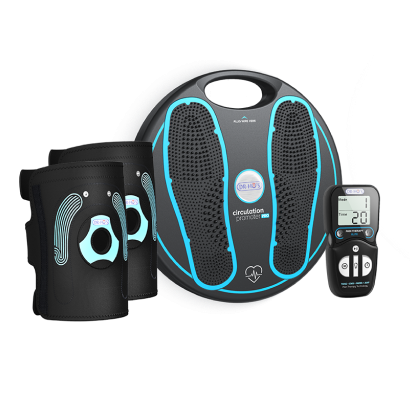
DR-HO'S takes pain management to the next level by incorporating a comprehensive 4-in-1 approach. While conventional TENS devices rely solely on one type of stimulation, DR-HO'S devices integrate four complementary technologies
NMES (Neuromuscular Electrical Stimulation): NMES technology reaches deeper muscle layers, encouraging more substantial muscle engagement. This helps support the treated area while promoting improved circulation.
Auto-Modulating Pulses: This system continuously varies the electrical impulses, ensuring your body doesn't become accustomed to a single pattern. This helps ensure sustained effectiveness throughout your treatment and prevents the diminishing returns often experienced with conventional devices

3. Back-friendly Stretches to Calm Lower Back Spasms
The natural reaction to pain in the lower back is often to rest. And while this can help in the moment of pain, stretching and exercise can be very beneficial as it helps muscles relax and increases blood flow to the area.
Tip: A really good pre-yoga stretch is a move called the Cat-Cow: Start on your hands and knees with your back straight and your head and neck in line. On an inhale, drop your belly toward the ground and look up toward the ceiling (cow pose). On an exhale, tuck in your stomach, arch your back and lower your head to your chest (cat pose). Do it gently, and stop if you feel any pain.
Back-pocket Stretch
Stand up and place both hands behind you as if you're putting them in the rear pockets of your jeans, hold your left wrist with your right (or vice versa); look up and extend (arch) your back.
Press Up
Start by lying on your stomach and place both hands parallel on the floor as if you were starting to do a push-up. Then gently engage your lower back, buttocks, and thighs as you lift your head and chest. Stay strong in your lower back and abdominals while breathing deeply. Hold this pose for 30 seconds to 1 minute and repeat 5-8 times.
Almost anyone can experience lower back spasms. The better you take care of your body, the lower your risk of getting muscle spasms in the lower back. Below are a few practices you can start incorporating into your daily routine today!

Eliminate stressors while doing daily activities
Most lower back spasms are the result of an everyday activity done incorrectly — activities as common as twisting to reach or lift an object, sitting at a computer in the same position for hours, bending over to vacuum and carrying shopping bags. Check out these easy tips to limit the extra stress and strain put on your lower back:
-
When standing, make sure to distribute even weight on both feet.
-
When sitting, maintain good sitting posture by sitting up straight with your back against the back of your chair and your feet flat on the floor — if possible, keep your knees slightly higher than your hips to reduce pressure on your lower back.
-
If your work requires long hours of sitting, invest in an ergonomic chair to support the spine.
-
Remove your wallet or cellphone from your back pocket when sitting to prevent putting extra pressure on your hips or lower back.
-
Switch between sitting and standing every hour or so to avoid extra strain on the lower back.
Being stressed can cause your muscles to tense, which increases the risk of lower back spasms.
When doing any lifting:
-
Get close to the object, bend your knees and tighten your stomach muscles. Use your leg muscles to support your body as you stand up. Avoid twisting your back when lifting. If the object is too heavy, get help from lifting equipment.
Make easy yet impactful alterations to your diet and habits
Making lifestyle changes, such as improving your diet and daily habits, can help manage and prevent lower back spasms. A small change to your diet can make a meaningful impact on your overall health and that includes bone health:
-
Watching your weight if you believe you’re vulnerable to lower back pain.
-
If you’re looking to shed a few pounds, consider these tips: start your day off with a healthy breakfast full of fiber and protein, watch your portions, replace any sugary or soda drinks with water or fruit juices, and eat slowly as this gives you time to feel full.
-
Use this list of heart-healthy foods to create a grocery list that will benefit your overall health.
-
Keep your bones strong and prevent the risk of osteoporosis — a condition that can weaken your bones and cause fractures by adding calcium and vitamin D to your diet.
-
It’s well known that smoking increases the risks of heart diseases and cancer, but it can also be a cause of persistent back pain.
Incorporate physical activities to exercise your bones and muscles
Muscles are meant to move and joints need to be kept fluid in order to protect your lower back from spasms. Regular exercising helps strengthen muscles and prevent lower back spasms. With frequent practices, these adjustments will soon feel like second nature and can help you prevent spasms in the lower back.
-
Avoid bed rest after the first day of back pain. Bed rest helps relieve pain at first, but it can delay healing. Continued rest without activity can reduce muscle flexibility and cause stiffness.
-
Aim for 30 minutes to an hour of any aerobic activity per day. If your schedule is tight, get moving for shorter periods throughout the day.

Look after your lower back and get back to feeling pain-free!
Don't be discouraged by the sudden discomfort that lower back spasms cause! By making easy adjustments to your lifestyle, diet and adding more physical activities to your routine, it is possible to manage muscle spasms in the lower back effectively. Hopefully, the tips above will help you address and relieve your lower back spasms on your terms!
Disclaimer: DR-HO'S content is intended for informational purposes only and should not be taken as medical advice. Please consult a certified medical professional for diagnosis and treatment recommendations.