

 Achy Muscles
 Arthritis, Bursitis & Tendonitis
 Back Pain
 Fibromyalgia
 Foot & Lower Leg Pain
 Joint Pain
 Knee Pain
 Neck Pain

Is a leg exerciser as good as walking?
If you've researched ways to stay active or improve leg health, you've probably encountered "leg exercisers" and wondered whether they can replace or match the benefits of walking. It's a fair question, especially if you're dealing with mobility challenges, spending long hours at a desk, or simply looking for convenient ways to cram some exercise into a busy day.
Here's the complication: "Leg exerciser" is a deceptively broad term that encompasses fundamentally different devices serving vastly different purposes. Some require you to actively pedal or push against resistance. Others move your legs for you while you sit. These distinctions aren't just technical details; they determine who each device serves, what benefits you can realistically expect, and whether the device can genuinely substitute for walking.
The short answer is this: If you can walk comfortably and safely, walking offers comprehensive health benefits that no seated device can fully replicate.
But for many people, the ability to walk regularly isn't a given. Mobility limitations, chronic pain, balance concerns, or recovery from injury can make walking difficult, uncomfortable, or even unsafe. For this population, leg exercisers serve a legitimate and valuable purpose as tools that address different needs when walking isn't possible.
What do people mean by "leg exerciser"?
The term "leg exerciser" is used to describe a broad range of devices that have almost nothing in common beyond involving your legs. This ambiguity creates confusion when people try to compare these devices to walking or evaluate which one might work for their needs.
Let's break down the two main categories:
1. Active leg exercisers (you do the work)
Active leg exercisers include under-desk ellipticals, mini exercise bikes, pedal exercisers, and similar devices. With these tools, you generate the movement through your own muscular effort.
You're pedalling, pushing against resistance, or driving the motion with your leg muscles.
Because you're actively contracting your muscles, these devices can provide some fitness benefits. Your heart rate may increase slightly, you'll burn some calories, and your leg muscles get a workout. The intensity depends entirely on how hard you push and what resistance settings the device offers.
Active leg exercisers are designed primarily for people who want to add movement during otherwise sedentary activities like working at a desk, watching television, or sitting for extended periods.
2. Passive leg exercisers (the device does the work)
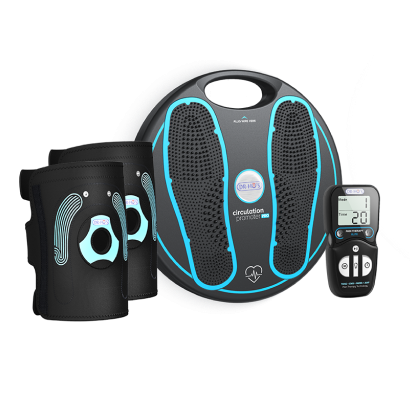
Passive leg exercisers like the DR-HO'S MotionCiser operate on an entirely different principle. These devices move your legs for you through continuous passive motion. You remain comfortably seated while the machine gently moves your feet and legs through a predetermined range of motion.
There's zero muscular effort required on your part. Your muscles aren't contracting to generate movement, your heart rate may not increase, and you're not burning significant calories. This isn't a design flaw; it's the entire point. Passive motion devices aren't exercise equipment; they're designed to support circulation and maintain joint mobility for people who cannot perform active exercise safely or comfortably.
What makes walking such a stellar exercise?
Before we evaluate any alternatives or supplements to walking, let’s examine why walking is considered such a stellar full-body workout. The benefits are more comprehensive than most people realize, extending far beyond simple calorie burn or "getting your steps in."
Physical health benefits across multiple systems
Walking is a low-impact exercise that delivers remarkable health benefits for nearly every system in your body, backed by substantial research from institutions worldwide.
-
Cardiovascular health and metabolic health: Walking lowers your risk of cardiovascular disease, stroke, type 2 diabetes, and high blood pressure. Regular walking improves key cardiovascular markers including blood pressure, cholesterol levels, and blood sugar regulation (GeroScience. Harvard Health Publishing). Research shows that people who walk at least 8,000 to 10,000 steps daily or engage in brisk walking for 30 minutes five times a week see the greatest reductions in health risks and improvements in life expectancy (CNBC).
-
Weight management: A brisk 30-minute walk burns approximately 150-200 calories (Arthritis Foundation), depending on your body weight and pace. While this might not sound dramatic, consistent daily walking creates a meaningful caloric deficit over time. More importantly, walking helps maintain muscle mass during weight loss and supports long-term weight management better than aggressive calorie restriction alone.
-
Bone and joint health: Walking is a weight-bearing exercise, which means it places gentle stress on your bones that encourages them to maintain or increase density. This is particularly important for preventing osteoporosis and reducing hip fracture risk in older adults (Arthritis Foundation). Regular walking also helps lubricate joints naturally, reducing arthritis-related pain and stiffness. The rhythmic movement encourages synovial fluid circulation, which nourishes cartilage and keeps joints functioning smoothly.
-
Muscle strength and functional fitness: While walking isn't heavy resistance training, it actively engages different muscle groups, including your glutes, hamstrings, calves, and core muscles. This functional strength directly translates to everyday activities like climbing stairs, carrying groceries, getting up from chairs, and maintaining your independence as you age. Walking also trains balance and coordination, developing the proprioception and stability that prevent falls.
-
Immune function: Regular walking boosts your immune system, reducing both the likelihood and severity of illnesses like colds and flu (UBC). Moderate-intensity walking appears to have an optimal effect on immune response without the immune suppression that can occur with very intense exercise.
Mental and cognitive benefits
The benefits of walking extend well beyond physical health into mental and emotional well-being.
-
Mood regulation and mental health: Walking triggers the release of endorphins (your body's natural mood elevators) while simultaneously lowering stress hormones like cortisol and adrenaline. Research consistently links regular walking to reduced symptoms of depression and anxiety (UBC).
-
Cognitive function and brain health: Ever solve a problem by going for a walk? Walking has been shown to improve sleep quality, sharpen thinking and memory, and reduce the risk of cognitive decline and dementia (American Heart Association). h
The accessibility advantage
Perhaps walking's greatest strength is its remarkable accessibility and flexibility.
-
Universal availability: Walking is free and available virtually anywhere. You don't need equipment beyond comfortable shoes.
-
Infinite scalability: Walking adapts to virtually any fitness level. You control the pace, distance, terrain, and intensity.
-
Social and lifestyle integration: Walking integrates seamlessly into daily life in ways that gym-based exercise cannot. You can walk to run errands, walk during lunch breaks, walk while talking with friends or family, or join walking groups for social connection.
-
Low learning curve: Unlike many forms of exercise that require instruction, technique refinement, or adaptation periods, most people have been walking since toddlerhood.
Active leg exercisers vs. walking
We’re limiting ‘active leg exerciser’ to include: Under-desk ellipticals, mini exercise bikes, and pedal exercisers (and not include elliptical machines, treadmill workouts, etc.). These smaller devices surged in popularity as people searched for ways to combat sedentary desk jobs. These devices promise to let you exercise while working, adding movement to hours that would otherwise be completely stationary.

The appeal is obvious: If you're stuck at a desk anyway, why not pedal while you're there? It's a reasonable idea, and active leg exercisers do provide legitimate value for adding movement to otherwise sedentary time.
But can they match what walking provides? No.
What active leg exercisers *do* offer
Active leg exercisers do require muscular effort: You're actively pedaling or pushing against resistance, which means your muscles are contracting and you're burning calories. Depending on the intensity and resistance settings, your heart rate may increase modestly, providing some cardiovascular benefit.
Research shows that elliptical-style movement places less stress on joints like knees and hips compared to the impact forces of walking, making them a reasonable choice for people with arthritis or those recovering from certain injuries (Gait Posture).
Key limitations compared to walking
Despite these benefits, active leg exercisers have significant limitations:
-
No weight-bearing stimulus
-
Limited functional movement
-
Restricted muscle engagement
-
Reduced intensity ceiling
-
Slightly lower calories burned
The verdict: Great supplements to your fitness routine
All said: Active leg exercisers serve best as supplements to walking, not replacements:
-
During unavoidable (and prolonged) desk time
-
As part of a broader routine that includes walking and other forms of exercise
-
For specific limitations: Some people recovering from certain injuries or managing specific conditions may be cleared for seated pedaling before they're cleared for walking.
Passive leg exercisers vs. walking
Passive motion devices like the DR-HO'S MotionCiser are not exercise equipment and cannot replace walking's fitness benefits. This isn't a limitation or design flaw; it’s actually intentional. These devices serve an entirely different purpose for a completely different set of needs.
If your goal is fitness, weight management, fall prevention, or athletic performance, passive motion devices are not what you need. If you can walk safely, you should walk.
What passive motion excels at
Passive leg exercisers serve a specific population with specific needs that have nothing to do with traditional fitness goals.
1. Supporting circulation during immobility
When you sit for extended periods, blood flow in your lower legs decreases significantly. Research shows that sitting for as little as 1.5 to 8 hours decreases arterial blood flow in lower leg arteries, impairs endothelial function, reduces muscle oxygenation, and leads to fluid retention causing swelling in calves and ankles (Exp Physiol.).
For people who cannot walk due to mobility limitations, these circulatory effects become chronic problems rather than temporary inconveniences from a long workday. Passive motion provides gentle, continuous movement that supports the muscle pump mechanism (the process by which rhythmic changes in muscle length and pressure help propel blood back toward the heart). While not as effective as active muscle contraction, passive movement can help counteract circulatory stagnation when active movement isn't possible.
2. Maintaining joint mobility
Your joints depend on movement to stay lubricated and healthy. Synovial fluid (the thick substance that lubricates cartilage and reduces friction) doesn't circulate on its own. It requires joint movement to encourage production and distribution.
Research published in the Journal of Functional Morphology and Kinesiology (J Funct Morphol Kinesiol.) shows that joint movement, especially cyclical or repetitive motion, significantly increases the rate at which specialized cells produce lubricating compounds in the joint cavity. This enhanced production is much greater during movement than during static stretching, with cyclical motion nearly doubling production rates compared to inactivity.
For someone with severe arthritis who finds weight-bearing movement too painful, or someone recovering from surgery who isn't yet cleared for active exercise, passive motion provides the gentle joint articulation that supports lubrication without requiring the person to bear weight, maintain balance, or push through pain.
3. Providing accessible movement when safety is a concern
The device operates while you're safely seated in a comfortable chair. There's no risk of losing your balance, no concern about your knees giving out, no worry about falling. For someone recovering from a fall, dealing with vertigo, managing severe osteoporosis, or simply unable to walk safely due to neurological conditions or advanced age, this safety factor cannot be overstated.
Who genuinely benefits from passive motion
Passive leg exercisers serve people who face significant barriers to active movement:
-
Severe arthritis or chronic pain that makes weight-bearing exercise too uncomfortable to sustain regularly
-
Balance disorders or fall risk where standing exercise feels dangerous or has led to previous falls
-
Recovery from surgery, stroke, or medical events during periods when active exercise isn't yet medically cleared
-
Advanced age with mobility limitations where walking has become unsafe or impossible
-
Neurological conditions affecting gait, coordination, or muscle control
-
Extended immobility periods due to medical conditions requiring bed rest or severely restricted activity
For these individuals, passive motion provides leg movement benefits that would otherwise be completely unavailable. It's not about replacing walking—it's about addressing circulation and joint mobility needs when walking simply isn't an option.
The DR-HO'S MotionCiser: A comprehensive passive approach
The DR-HO'S MotionCiser integrates three complementary technologies designed specifically to work with your body's natural processes:
-
Continuous passive motion provides the cyclical joint movement and gentle muscle length changes that research shows support circulation and joint health. The device moves your feet and legs through a walking-like pattern while you remain comfortably seated, encouraging both synovial fluid production and the muscle pump mechanism that supports blood flow.
-
High-frequency vibrational massage adds neuromuscular stimulation that complements the passive motion. The vibrations help stimulate nerve pathways and can assist with muscle tension relief, addressing the stiffness many people with limited mobility experience.
-
Therapeutic heating with five adjustable temperature settings addresses a common concern for people with circulation issues: cold feet. The gentle warmth helps relax muscles, supports tissue flexibility, and increases local blood flow. Many users find the combination of movement and heat particularly soothing and comfortable for extended use.
This integrated approach provides more comprehensive support than any single technology alone—addressing joint mobility, circulation support, muscle stimulation, and comfort simultaneously.

Rounding up your options: Walking vs. active vs. passive leg exercisers
To help clarify how these approaches differ across key factors, here's a direct comparison:
|
Feature |
Walking |
Active Leg Exercisers (under-desk elliptical/mini bike) |
Passive Leg Exercisers (e.g. MotionCiser) |
|
Primary purpose |
Comprehensive fitness and functional movement |
Add activity during desk work |
Circulation and joint mobility support |
|
Your effort required |
Active muscle contraction, self-propelled |
Active pedaling/pushing against resistance |
None - device moves legs for you |
|
Cardiovascular benefit |
Significant when moderate-vigorous intensity |
Mild to moderate depending on effort |
None |
|
Muscle strengthening |
Yes - functional strength for daily activities |
Limited - depends on resistance and effort |
No - no active muscle contraction |
|
Calorie burn |
~304 cal/hour at 3 mph (155 lb person) |
~258 cal/hour depending on intensity |
Minimal |
|
Balance training |
Yes - crucial for fall prevention |
No - seated |
No - seated |
|
Weight-bearing for bone health |
Yes - supports bone density |
No - seated |
No - seated |
|
Joint impact |
Low to moderate depending on pace/terrain |
Very low - no impact forces |
Very low - gentle movement |
|
Circulation support |
Excellent through active muscle pump |
Moderate through active muscle contraction |
Gentle support through passive motion |
|
Joint mobility |
Excellent - full range of motion |
Limited by seated position |
Gentle cyclical motion supports lubrication |
|
For mobility limitations |
Not suitable if walking unsafe/painful |
May work for some limitations |
Specifically designed for significant limitations |
|
Accessibility |
Free, available anywhere |
Requires equipment purchase |
Requires equipment purchase |
|
Safety considerations |
Requires balance, coordination, safe environment |
Requires ability to pedal, some core stability |
Seated - minimal balance/coordination needed |
|
Best for... |
Anyone who can walk safely and comfortably |
Adding movement to unavoidable desk time as supplement to walking |
Those unable to walk safely due to pain, balance issues, or mobility limitations |
The single most important question: Can you walk comfortably and safely?
If your honest answer is YES → Walking should be your primary leg exercise activity. Nothing we've discussed can match its comprehensive benefits for your overall health, functional fitness, and independence. Active leg exercisers might supplement your routine during desk work, but they shouldn't replace actual walking time. Passive motion devices are unnecessary for your situation unless you have specific circulation concerns that your healthcare provider has identified.
If your honest answer is NO or NOT ALWAYS → You need to identify your specific barriers to walking, because the right alternative depends entirely on what's preventing you from walking.
Disclaimer: DR-HO'S content is intended for informational purposes only and should not be taken as medical advice. Please consult a certified medical professional for diagnosis and treatment recommendations.
More FAQs
Can a leg exerciser replace walking for weight loss?
No. Active leg exercisers burn some calories but significantly fewer than walking, and they don't provide the functional fitness and metabolic benefits that support long-term weight management. If weight loss is your goal and you can walk, walking combined with appropriate nutrition changes is far more effective. Passive leg exercisers are not designed for weight loss at all and burn minimal calories since the device moves your legs for you.
Is a passive leg exerciser worth it if I can walk?
If you can walk comfortably and safely, walking should be your priority for leg health and overall fitness. Passive motion devices like the MotionCiser are specifically designed for people who cannot walk safely or comfortably due to significant mobility limitations, severe pain, or balance concerns. They excel at providing circulation support for this population but don't replace the comprehensive benefits of active movement. If you can walk, invest your time and resources in walking rather than passive motion.
How often should I use a leg exerciser?
This depends entirely on which type you're using and your situation.
-
For active under-desk exercisers: Use them during desk work hours, but ensure you're also taking walking breaks whenever possible—don't let desk pedaling replace actual standing and walking.
-
For passive motion devices like the MotionCiser: DR-HO'S recommends 3 to 5 sessions of 20 minutes daily for optimal circulation and joint mobility support. Always start with shorter sessions and adjust based on comfort and your healthcare provider's guidance.
Can seniors use leg exercisers instead of walking?
Walking remains ideal for seniors who can do it safely. It provides irreplaceable balance training, functional strength, and bone density benefits that directly support independence and fall prevention. However, for seniors with genuine fall risk, significant balance disorders, or other mobility limitations that make walking unsafe, passive leg exercisers provide crucial circulation and joint mobility support that would otherwise be unavailable. For detailed guidance specific to senior needs, see our complete guide: Do passive leg exercisers work for seniors?