

 Achy Muscles
 Arthritis, Bursitis & Tendonitis
 Back Pain
 Fibromyalgia
 Foot & Lower Leg Pain
 Joint Pain
 Knee Pain
 Neck Pain

For many older adults, leg health is a frustrating paradox: You need more movement than ever to preserve mobility and independence, yet age-related changes, chronic conditions, and safety concerns make traditional exercise increasingly difficult or even risky.
This is a big question: Can a passive motion device (one that moves your legs for you) provide benefits when active exercise has become challenging?
The answer is yes, but with important nuances specific to senior health needs. Passive leg exercisers can be very helpful for older adults with mobility limitations, but only if you know what they can realistically do and how they fit into a comprehensive approach to leg health and independence.
Why this question is so important for seniors
Leg health gets much more serious as we age. Strong, mobile legs are the foundation of independence, safety, and quality of life.
Mobility determines independence
Your ability to rise from a chair, navigate stairs, walk to the bathroom, cook meals, and move safely around your home all depend on leg strength and mobility. Research (J Funct Morphol Kinesiol.) shows that leg muscle power is a critical predictor of functional independence in older adults, with lower leg power serving as an early indicator of declining function.
The scope of mobility challenges
The statistics reveal how widespread mobility limitations become:
-
Approximately 22-25% of seniors use at least one mobility aid, such as canes, walkers, or scooters (J Gerontol B Psychol Sci Soc Sci.)
-
At least 36-40% experience mobility limitations or use some form of assistive device (Strategy Corp Institute)
-
Approximately 50% of seniors have diagnosed osteoarthritis, causing joint pain and stiffness that make movement uncomfortable (CDC)
These are real people facing daily challenges that younger adults rarely consider: The difficulty of getting dressed, the fear of falling, the loss of confidence that comes with declining mobility.
The barriers to traditional exercise
Several age-related factors can make traditional leg exercises increasingly challenging:
-
Joint pain and arthritis create a situation where movement hurts so many reduce activity which then causes further stiffness and weakness in a downward spiral.
-
Balance concerns and fall risk make standing exercises feel dangerous. With approximately 28-35% of adults over 65 experiencing a fall annually (Adv Exp Med Biol.), and falls often result from the very leg weakness that exercise is meant to address.
-
Chronic health conditions add complexity. Cardiovascular disease, diabetes, and other conditions common in older adults can limit exercise capacity, affect energy levels, and create safety concerns around exertion.
-
Recovery from medical procedures like hip or knee replacement, stroke, or other significant health events may leave you temporarily or permanently unable to perform traditional exercises, precisely when movement matters most for recovery.
-
Reduced endurance and energy mean that even if you want to exercise, fatigue may prevent consistent activity. The exercise that would help improve your energy feels impossible to do.
This is where passive motion technology becomes particularly relevant—it provides movement benefits without requiring you to generate the force, maintain balance, or work through pain barriers that make traditional exercise so challenging.
How passive motion technology works with aging bodies
To see if passive leg exercisers work for seniors we need to look at what happens physiologically when gentle continuous movement is applied to aging legs and joints.
The joint health connection
Your joints rely on synovial fluid for lubrication and nourishment. This thick, viscous substance reduces friction and helps maintain healthy cartilage. But synovial fluid doesn't circulate on its own—it requires movement.
Research published in the Journal of Functional Morphology and Kinesiology (J Funct Morphol Kinesiol.) shows joint movement, especially cyclic or repetitive exercise, increases the rate at which specialized cells secrete crucial lubricating components into the joint cavity. More importantly for seniors, this enhanced secretion is much greater during movement than during static stretching, with cyclical motion nearly doubling production rates compared to inactivity.
For older adults with arthritis or joint stiffness, this is key. Passive motion exercisers can provide cyclical joint movement without requiring you to bear weight, maintain balance, or push through pain. The device moves your joints through a comfortable range of motion, encouraging the very movements that help keep joints flexible and comfortable.
Supporting circulation when mobility is limited
As we age, circulatory efficiency naturally declines. This makes the effects of prolonged sitting even more problematic for seniors. Research demonstrates concerning circulatory consequences:
-
Sitting for as little as 1.5 to 8 hours decreases arterial blood flow in lower leg arteries, impairing endothelial function (Exp Physiol.)
-
Muscle oxygenation levels drop with sitting duration, reducing oxygen delivery to tissues (Exp Physiol.)
-
Prolonged sitting leads to significant fluid retention in lower limb muscles, causing swelling in calves and ankles (Yale Medicine)
-
Microvascular function diminishes, making it harder for blood vessels to respond appropriately (Exp Physiol.)
For seniors who may already have compromised circulation due to age-related vascular changes or conditions like diabetes, these sitting-related effects compound existing challenges.
Passive motion addresses this through the muscle pump mechanism. The muscle pump works by utilizing muscle contraction and relaxation to propel blood toward the heart, with one-way valves in veins preventing backflow (Anatomy & Physiology by Lindsay M. Biga et al, shared under a Creative Commons Attribution). While active muscle contraction produces the strongest effect, even gentle passive movement creates changes in muscle length and pressure that can encourage venous return.
For a senior with limited mobility who may spend much of the day sitting, passive motion offers a way to combat circulatory stagnation without requiring the ability to walk, stand, or perform active exercise.
The safety advantage: Seated operation
The device operates while you're safely seated in a comfortable chair. There's no risk of losing your balance, no concern about your knees giving out, no worry about falling. This eliminates one of the primary barriers that prevent seniors from exercising—the fear of injury from the exercise itself.
For someone recovering from a fall, dealing with vertigo, or is simply concerned about their stability, this safety factor cannot be overstated. You can receive movement benefits without exposing yourself to the very risks that exercise is meant to prevent.
What passive leg exercisers can realistically do for seniors
Now that we understand the mechanisms we can set realistic expectations.
Key benefits for older adults
It's important to be realistic about the health benefits of leg exercisers. They will generally not help build muscle mass or improve overall fitness levels. But there are still notable health benefits, including:
-
Combat the effects of prolonged sitting and limited mobility by providing continuous, gentle movement that supports circulation even when you're unable to walk or stand regularly. This is particularly valuable for seniors whose mobility is restricted by weather, health conditions, or temporary recovery periods.
-
Support healthy circulation in lower extremities through the muscle pump mechanism and by counteracting the documented arterial blood flow reductions that occur with extended sitting. Improved circulation can help reduce leg swelling, ease discomfort, and support overall vascular health.
-
Help maintain joint flexibility and reduce stiffness through cyclical motion that encourages synovial fluid production and keeps joints moving through their range of motion. Regular use can help maintain the mobility you currently have, making daily activities more comfortable.
-
Provide gentle muscle stimulation and tension relief without active contraction. The combination of motion and vibration can help ease the muscle tension that accumulates from inactivity or compensatory movement patterns.
-
Offer safe, daily movement when other options are limited by eliminating balance requirements, weight-bearing stress, and coordination demands. You can maintain a consistent movement routine regardless of weather, energy levels, or temporary setbacks.
-
Support recovery and rehabilitation (with medical clearance) by providing gentle movement during periods when active exercise isn't yet possible. This can help maintain some degree of mobility during recovery from surgery or medical events.
Important limitations seniors and caregivers need to understand
Passive motion technology offers genuine benefits, but it's equally important to understand what it cannot do:
-
It will not build muscle strength or prevent falls. While passive motion maintains joint mobility and circulation it doesn’t create the muscle contraction required for strength building. Fall prevention requires active strengthening exercises, balance training and functional movement practice. If you can do any active exercise safely those activities are still important.
-
It's not a replacement for physical therapy or medical treatment. If you're recovering from surgery, managing a chronic condition, or experiencing new mobility problems, professional guidance from a physical therapist or healthcare provider is essential. Passive motion can complement these interventions but doesn't replace them.
-
It won't improve cardiovascular fitness. Your heart rate doesn't significantly elevate during passive motion, so you're not gaining aerobic conditioning benefits. If cardiovascular health is a goal and you're able to perform active exercise, those activities are still valuable.
-
It should complement, not replace, active movement when possible. For seniors who retain some ability to walk, perform chair exercises, or engage in other active movement, those activities provide benefits that passive motion cannot. The device works best as part of a comprehensive approach that includes whatever active movement your current abilities allow.
Safety considerations for senior users
While passive motion technology is generally safe certain considerations matter more for older adults:
When passive motion is especially beneficial
-
During recovery periods when active exercise (even low impact exercise) isn't yet cleared by your healthcare provider
-
When arthritis pain makes weight-bearing exercise too uncomfortable
-
When balance concerns make standing exercises feel risky
-
During periods of reduced mobility due to temporary illness or weather limitations
-
As a supplement to maintain mobility between physical therapy sessions or active exercise periods
When to consult your healthcare provider first
Always discuss passive motion therapy with your doctor before starting if you have:
-
Peripheral neuropathy or reduced sensation in your feet, as you may not be able to detect discomfort or pressure issues during use
-
Active thrombosis or history of blood clots, as movement could theoretically affect clot stability (though gentle passive motion is typically considered low risk)
-
Severe circulatory conditions like advanced peripheral arterial disease
-
Recent surgery or injury requiring specific movement restrictions
-
Pacemakers or implanted electronic devices (specific to devices with electrical stimulation components)
-
Any condition your doctor has advised restricts certain types of movement
Starting slowly and monitoring response
Begin with shorter sessions at lower intensity settings to assess how your body responds. Gradually increase duration and intensity as comfort allows. Regular skin checks during use help ensure the therapy remains comfortable, particularly important for those with reduced sensation or fragile skin.
The device should never be used on sleeping or unconscious individuals, or anyone unable to communicate discomfort.
Choosing technology that addresses senior needs
Not all passive devices offer the same features or benefits. When evaluating options, consider technologies that specifically address aging bodies' needs.
Continuous passive motion vs. vibration-only devices
Simple vibration plates deliver high-frequency vibrations but don't actually move your joints through a range of motion. While they may provide some neuromuscular stimulation, they lack the cyclical joint movement that research shows supports synovial fluid production and joint health.
Continuous passive motion devices actually move your legs and feet through walking-like patterns while you remain seated. This creates the joint articulation and rhythmic muscle changes that support both lubrication and circulation.
The value of combination approaches
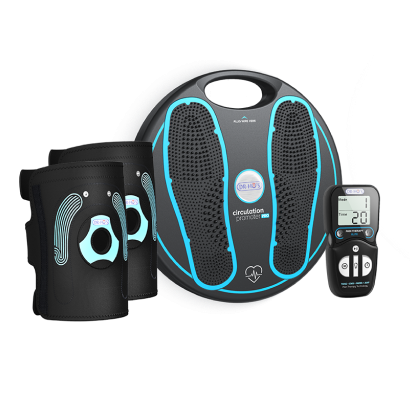
The most effective devices for seniors integrate multiple therapeutic modalities. The DR-HO'S MotionCiser, for example, combines three complementary technologies designed to work with aging bodies:
-
Continuous passive motion provides the cyclical joint movement that research shows supports circulation and joint health. The device moves your feet and legs through a gentle, walking-like pattern that encourages synovial fluid production and activates the muscle pump mechanism—all while you remain safely seated.
-
High-frequency vibrational massage adds neuromuscular stimulation that complements the passive motion. The vibrations help stimulate nerve pathways and can assist with muscle tension relief, addressing the stiffness many seniors experience.
-
Therapeutic heating with five adjustable temperature settings addresses a common senior concern: cold feet. The gentle warmth helps relax muscles, supports tissue flexibility, and increases local circulation. Many older adults find the combination of movement and heat particularly soothing and comfortable.

This comprehensive approach provides more complete benefits than any single technology alone—addressing joint mobility, circulation support, muscle stimulation, and comfort simultaneously.
Senior-friendly features matter
Look for devices with:
-
Remote control operation so you can adjust settings without bending over
-
Adjustable intensity levels to accommodate varying tolerance and comfort needs
-
Seated operation for maximum safety
-
Straightforward controls that don't require technical expertise
-
Stable base that won't shift during use
Integrating passive motion into your senior wellness routine
For optimal results, approach passive motion as part of a consistent daily routine rather than occasional use.
Recommended usage for seniors
DR-HO'S recommends using the MotionCiser 3 to 5 times daily for 20-minute sessions. This frequency allows you to:
-
Start your morning with a session to encourage circulation and reduce overnight stiffness
-
Break up prolonged sitting periods during the day
-
Provide muscle relief and relaxation in the evening
-
Maintain consistent joint movement and circulation support throughout your day
The device is designed for use while sitting and should not be used while standing. This makes it perfect for use while reading, watching television, or simply relaxing—integrating movement seamlessly into your daily routine without requiring dedicated "exercise time" that might feel overwhelming.
Complementary approaches when possible
While passive motion provides valuable benefits, the most comprehensive approach to senior leg health often includes multiple strategies working together—always within your current abilities and medical clearances.
-
Gentle active exercise when possible: If you can do some physical activity safely, even small activities complement passive motion beautifully. Short walks around your home, using other exercise equipment like bands, seated leg lifts or ankle circles are active muscle contractions that passive motion can’t replicate. The key is doing what you can safely, not pushing into pain or risking falls.
-
Professional therapeutic support: Physical therapists can design exercises specifically for your abilities and limitations. Registered massage therapists may help with muscle tension. These professional interventions address different aspects of mobility than passive motion alone.
-
Other supportive therapies: Some seniors benefit from combining passive motion with other modalities. For those dealing with chronic pain, targeted pain management approaches can make it easier to stay active. The goal is finding the right combination of therapies that work within your current capabilities and offer heath benefits.
The advantage of passive motion is that it provides consistent benefits regardless of your ability to engage in these other activities. On days when pain is high, energy is low, or weather prevents outdoor activity, passive motion continues supporting circulation and joint mobility.
Realistic expectations: What success looks like
For seniors using passive motion technology, success looks different than it does for younger adults pursuing fitness goals.
Maintenance, not transformation
For most seniors, the goal of passive motion is to maintain current mobility and prevent further decline rather than achieve dramatic improvements. If the device helps you:
-
Keep joints as flexible as they are now rather than becoming stiffer
-
Maintain comfortable circulation and reduce leg swelling
-
Continue performing daily activities with your current level of ability
-
Avoid some of the mobility decline that might otherwise occur with aging and inactivity
Then it’s working.
Consistency over intensity
Unlike traditional exercise where intensity drives results, passive motion benefits accumulate through regular use. Multiple short sessions throughout the day provide ongoing support for circulation and joint mobility.
This fits well with senior energy levels and schedules. Rather than requiring a single focused workout that might exhaust you, you can do brief sessions throughout your day whenever you’re sitting anyway.
Independence and quality of life
Perhaps the most important measure of success is how passive motion contributes to your independence and daily quality of life. If regular use helps you:
-
Feel less stiffness when rising from your chair
-
Experience reduced leg discomfort from prolonged sitting
-
Maintain the mobility needed for daily activities
-
Feel more comfortable and confident in your movement
-
Avoid some mobility decline during recovery periods or seasonal limitations
… then these are successes, even if not as flashy as the fitness transformations you see in exercise ads.
The bottom line for seniors: Do passive leg exercisers work?
Yes—passive leg exercisers work for seniors when expectations align with what the technology can realistically deliver.
What makes passive motion especially relevant for seniors is what it doesn't require: You don't need strength, balance, coordination, or the ability to bear weight. You don't have to worry about falling, hurting your knees, or pushing through pain. The device provides movement benefits while you remain safely seated in a comfortable chair.
However, passive motion isn’t a magic solution that replaces all other interventions. It won't build the muscle strength needed for fall prevention. It won't provide cardiovascular conditioning. It won't replace physical therapy or medical treatment for specific conditions. And it works best when it complements whatever active movement your abilities allow, rather than replacing it entirely.
The real value of passive leg exercisers for seniors is accessibility and consistency. For an older adult whose mobility is limited by arthritis, balance issues or chronic conditions, a device that provides gentle, safe movement throughout the day addresses a real need. For someone recovering from surgery or injury who isn’t yet cleared for active exercise, passive motion offers a way to maintain some degree of leg movement during the recovery period.
The key is approaching passive motion technology with clear understanding rather than unrealistic hopes. Continuous passive motion combined with vibration and therapeutic heat provides real physiological benefits for older adults. Understanding those benefits—and working with your healthcare providers to integrate passive motion appropriately into your overall care—allows you to make informed decisions about maintaining the mobility and independence that matter most in your senior years.
Disclaimer: DR-HO'S content is intended for informational purposes only and should not be taken as medical advice. Always consult your doctor before starting any new exercise regimen or trying a new product, especially if you have a pre-existing health condition.