



 Achy Muscles
 Arthritis, Bursitis & Tendonitis
 Back Pain
 Fibromyalgia
 Foot & Lower Leg Pain
 Joint Pain
 Knee Pain
 Neck Pain

Can a TENS machine cause bruising? What users need to know
You've just wrapped up a TENS session and noticed something on your skin that doesn't look quite right. Maybe it's redness where the pads were sitting. Maybe it looks a little darker than usual. Whatever you're seeing has left you wondering if a transcutaneous electrical nerve stimulation (TENS) machine can cause bruising.
It's a reasonable question, and you're not alone in asking it. With so many devices on the market and so much conflicting information online, it can be hard to know what's a normal reaction, what's a sign you need to adjust your technique, and what warrants a call to your doctor.
Here's what's actually going on and what to do about it.
Can a TENS machine cause bruising?
The short answer: true bruising from TENS therapy is uncommon—and when it does occur, other factors are usually involved.
Bruising occurs when small blood vessels beneath the skin rupture, usually from physical impact or pressure (MedlinePlus). Transcutaneous electrical stimulation works by delivering low-voltage electrical current via adhesive pads, not by physical force. TENS therapy doesn't normally cause the kind of mechanical trauma that leads to bruising.
That said, people with fragile skin, those taking blood thinners such as warfarin, or those using very high-intensity settings may rarely see bruising as a secondary effect. Removing adhesive pads too forcefully on delicate skin can also cause localized trauma that looks like bruising. For example, someone taking blood thinners who removes electrode pads from fragile skin may notice discoloration afterward—but that's the skin's vulnerability and the adhesive interaction at play, not the electrical current itself.
This is an important distinction when comparing TENS with mechanically based devices. Massage guns, for example, use percussive mechanical action and can cause bruising, especially if used too aggressively or on sensitive areas. The vigorous percussion that makes them useful for muscle recovery can overstimulate tissue—a risk that TENS therapy simply doesn't carry.
If you're seeing what appears to be actual bruising after using a TENS unit—dark discoloration that isn't explained by redness or pad marks—that's worth discussing with a healthcare provider. It could reflect a skin sensitivity, a reaction to a medication, or an unrelated condition that has nothing to do with your device.
What is a TENS machine and how does it work?
A TENS machine is a noninvasive method of pain management that delivers low-frequency electrical impulses through adhesive pads placed on the skin. These electrical impulses work by stimulating sensory nerve endings, which helps interrupt pain signals before they reach the brain and may trigger the body's natural endorphin release—mechanisms supported by the gate control theory of pain (Cleveland Clinic).
TENS therapy is widely used for both chronic pain and acute pain conditions, including back pain, arthritis, sciatica, nerve pain, and muscle tension. It's also one of the safest categories of at-home pain management devices when used correctly.
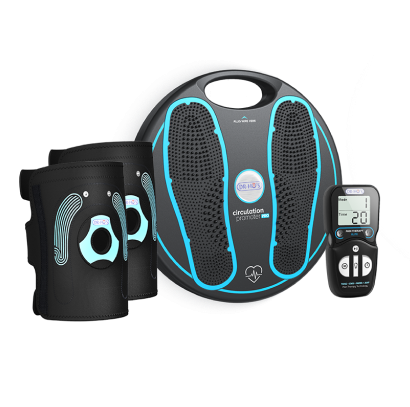
DR-HO'S devices go a step further than standard TENS units. Rather than relying on a single mode of electrical stimulation, DR-HO'S 4-in-1 technology uses proprietary AMP Technology to deliver four therapeutic modalities at once—more on that below.

What skin reactions can TENS therapy actually cause?
While true bruising from TENS therapy is uncommon, some users do experience skin reactions. These are common, well-documented, and—in most cases—easy to prevent.
|
Reaction |
What it looks like |
Common cause |
What to do |
|
Skin redness |
Pink or red skin under or around the pad area |
Increased blood flow; mild adhesive friction |
Usually resolves on its own; no bruising |
|
Tingling or itching |
Sensation at the electrode site during or after use |
Normal nerve stimulation response |
Reduce intensity if uncomfortable |
|
Contact dermatitis |
Rash or irritation extending beyond the pad area |
Adhesive sensitivity or allergy (Verywell Health) |
Try hypoallergenic electrodes; consult a doctor if it persists |
|
Electrode burns |
Localized skin irritation or marks |
Degraded pads, broken skin, or intensity too high |
Replace worn pads; never apply to broken skin |
|
Bruising |
Dark discoloration not explained by redness |
Fragile skin, blood thinners, forceful pad removal—not the electrical current |
Consult a healthcare provider |
Most skin reactions are a sign that something about the setup needs to be adjusted—not that TENS therapy is inherently harmful.
Why device quality matters for your experience
When you're browsing devices online—particularly on large retail platforms—it's easy to assume that two TENS machines with similar casings and price tags are essentially the same product. Several factors suggest that's rarely the case.
Budget electrodes often use inferior adhesives that degrade quickly, leading to uneven skin contact. Uneven contact concentrates the electrical current in a smaller area than intended, which increases the risk of skin irritation. Medical-grade electrodes maintain consistent adhesion across the full pad surface, distributing current evenly and reducing the likelihood of discomfort.
Similarly, budget TENS units may use lower-grade electrical components that produce inconsistent output. This isn't just a comfort issue—inconsistent stimulation can affect both safety and how well the device works for temporary pain relief.
DR-HO'S devices are FDA-cleared, meaning they've been evaluated against strict standards for safety and basic function. That's a meaningful baseline—many budget devices sold on large retail platforms haven't undergone the same level of scrutiny.
DR-HO'S proprietary AMP Technology: 4 complementary therapies
Standard TENS-only devices address pain signals at the nerve level. That's valuable—but for many users managing chronic pain, it's only part of what they need. DR-HO'S proprietary 4-in-1 technology delivers four therapeutic modalities simultaneously:
-
TENS (transcutaneous electrical nerve stimulation) sends low-voltage electrical impulses through your skin to stimulate sensory nerve endings and disrupt pain signals before they reach your brain. This foundational mechanism engages the gate control theory, helping block pain transmission while triggering your body's natural endorphin release.
-
EMS (electrical muscle stimulation) causes muscles to contract and relax rhythmically, which can help release tight knots, promote muscle relaxation, and improve blood circulation to the treated area.
-
NMES (neuromuscular electrical stimulation) targets specific nerve pathways for deeper muscle contractions, helping to re-educate muscles, increase local blood circulation, and improve range of motion.
-
Auto-modulating pulses continuously vary the electrical impulses across over 300 stimulation patterns to maintain the effectiveness of the therapy. This sophisticated variation prevents the nervous system accommodation that reduces effectiveness in standard TENS units. Your body doesn't adapt to predictable stimulation because the patterns are constantly evolving.
This sophisticated approach to electrical stimulation helps provide temporary relief by addressing both nerve sensation and muscle function simultaneously.

Important safety reminders and best practices
Your DR-HO'S TENS device is FDA-cleared and designed with your safety in mind. Like any health device, following some basic guidelines helps ensure you get the most benefit from your sessions. These common-sense precautions are simple to follow and help you use your device effectively:
-
Always start with your device turned off when placing or adjusting electrodes
-
Always use two pads of the same size to treat any area
-
Spray the pads with water before and after each use
-
In general, you never want the pads to touch
-
Begin with the lowest-intensity setting
-
Never remove electrodes while the device is running
-
Ensure electrodes are making good contact with clean, dry skin
-
Replace electrodes when they begin losing their adhesive quality
Areas to avoid
While your DR-HO'S device is designed to help provide relief, certain areas should always be avoided when placing electrodes:
-
Eyes or the surrounding area
-
Mouth
-
Front of the neck
-
Irritated or broken skin or wounds
-
Any areas with tumors
-
Directly over the spinal cord/column
Special considerations
-
Do not use while pregnant
-
If you have cardiac concerns, consult your healthcare provider before use
-
Do not use with a pacemaker or similar device
-
Always remove jewelry or metal objects from the area where you'll be placing electrodes
When to seek medical advice: If pain persists, worsens, or is accompanied by other concerning symptoms—such as swelling, redness, fever, or numbness—consult a healthcare provider to identify and address the underlying cause.
The bottom line
If you came here worried your device was causing bruising, the most likely explanation is something simpler—redness, adhesive marks, or a skin sensitivity that's easy to manage. TENS therapy doesn't directly cause bruising, and true bruising is uncommon. When it does appear, other factors—skin fragility, medication, or technique—are usually involved. If you're seeing true bruising after using a TENS unit, that's a reason to speak with your doctor, not necessarily a sign your device is at fault.
Managing pain is hard enough without worrying about whether your device is working against you. With the right equipment, the right setup, and the right placement technique, TENS therapy is a well-tolerated, drug-free way to relieve pain that many people integrate into their daily routines.
Disclaimer: DR-HO'S content is intended for informational purposes only and should not be taken as medical advice. Please consult a certified medical professional for diagnosis and treatment recommendations.
Frequently asked questions
Can a TENS machine cause bruising under the skin?
True bruising from TENS therapy is uncommon, and the electrical current itself is not the cause. When bruising does occur, other factors are usually involved—fragile skin, blood-thinning medications, very high-intensity settings, or forceful removal of adhesive pads. If you notice dark discoloration that isn't explained by redness or pad marks, consult a healthcare provider.
Why is my skin red after using a TENS unit?
Redness at the electrode site is a common and typically harmless response. It's usually caused by increased blood flow to the area during electrical stimulation or mild contact with the adhesive. It should fade shortly after removing the pads. If redness persists or spreads, reduce intensity, check your electrode placement, and consider whether you may have an adhesive sensitivity.
Is it normal to have marks where the TENS pads were?
Yes—light marks or temporary discoloration from the adhesive outline are normal and usually resolve quickly. If you're seeing persistent skin changes, replace worn-out pads and ensure your skin is clean and dry before each session.
Can transcutaneous electrical nerve stimulation make pain worse if used incorrectly?
Using a TENS device at too high an intensity, with poorly placed electrodes, or over areas where use is contraindicated can cause discomfort or skin irritation. Start at a low intensity, follow placement guidance for your specific condition, and avoid the areas listed above.
How often should you replace TENS electrode pads to avoid skin irritation?
When adhesion quality drops—edges curling, uneven sensation during therapy, or needing to increase intensity to get the same relief—try cleaning the pad surface gently with water first, or apply a small amount of conductive gel. If adhesion doesn't recover, it's time to replace them. See DR-HO'S guide on how to make TENS unit pads sticky again for a full restoration walkthrough. Clean storage and keeping pads away from oils and lotions will extend their life considerably.
Are there people who shouldn't use a TENS device for pain management?
Yes. People who are pregnant, have a pacemaker or other implanted electrical device, or have heart problems shouldn't use a TENS machine without first consulting a healthcare provider. Electrodes should never be placed on broken skin, directly on the spine, or near the heart and throat. See the full contraindications list above.
What's the difference between TENS therapy and a massage gun for temporary pain relief?
TENS therapy uses low-voltage electrical impulses to interact with sensory nerve pathways—it addresses pain at the nerve level. Massage guns use mechanical percussion to work on muscle tissue, similar to physical massage. Because of the physical force involved, massage guns can cause bruising if used too aggressively (Outside magazine), which isn't a risk with TENS machines when used correctly. For active pain management, TENS is the appropriate tool. Massage guns are better suited to post-workout muscle recovery in the absence of active pain or inflammation.